Hand Claude the sprint. Watch it work, not the chat.
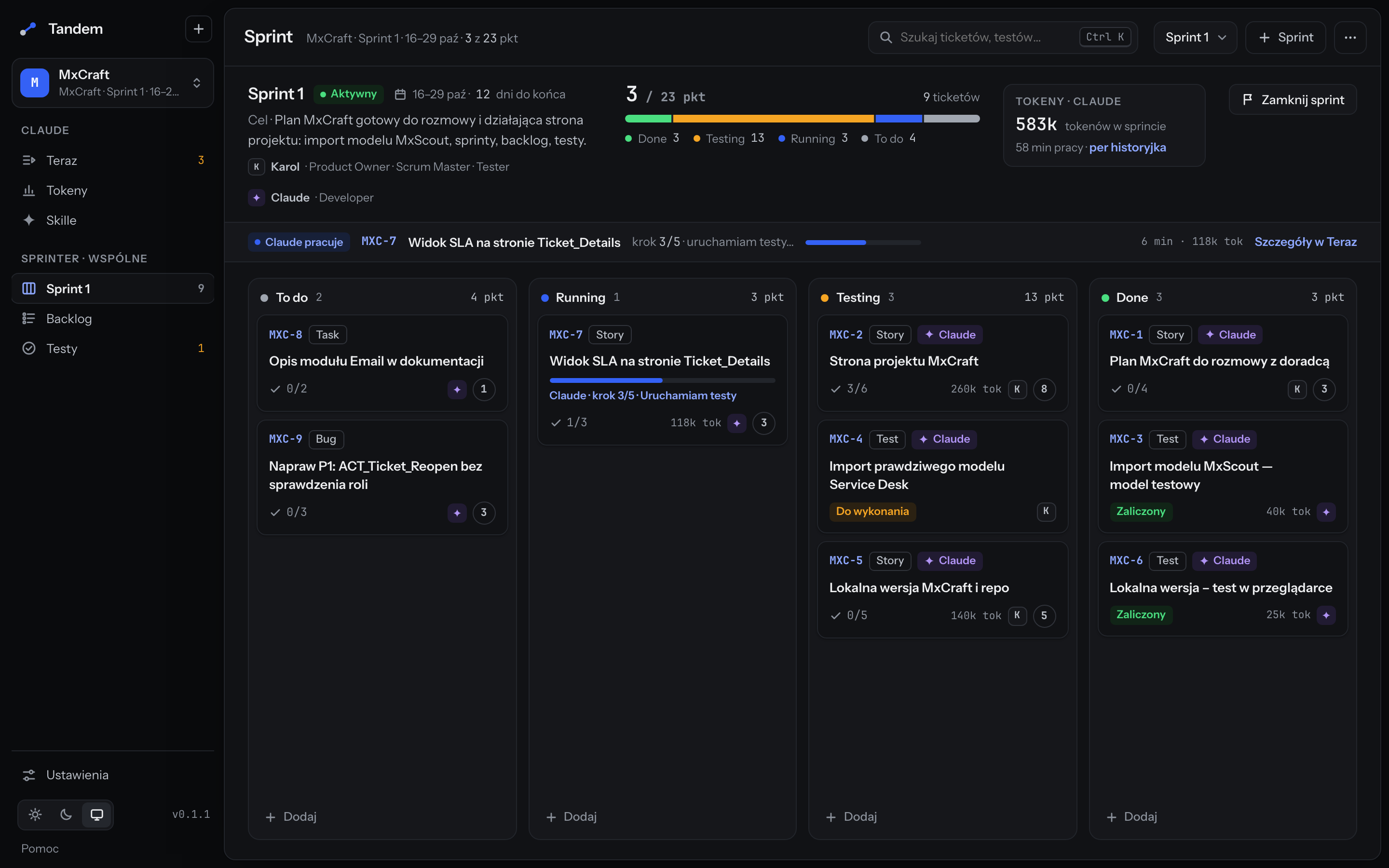
Tandem is the second seat next to Claude Code. It takes the stories of your sprint in order, reports every step with time and tokens, parks its questions in a checklist for you, puts finished work on your desk as a test — and never marks Done itself. One board, shared with MxCraft. Nothing to read but the board.
The agent is fast.
Reading it is not.
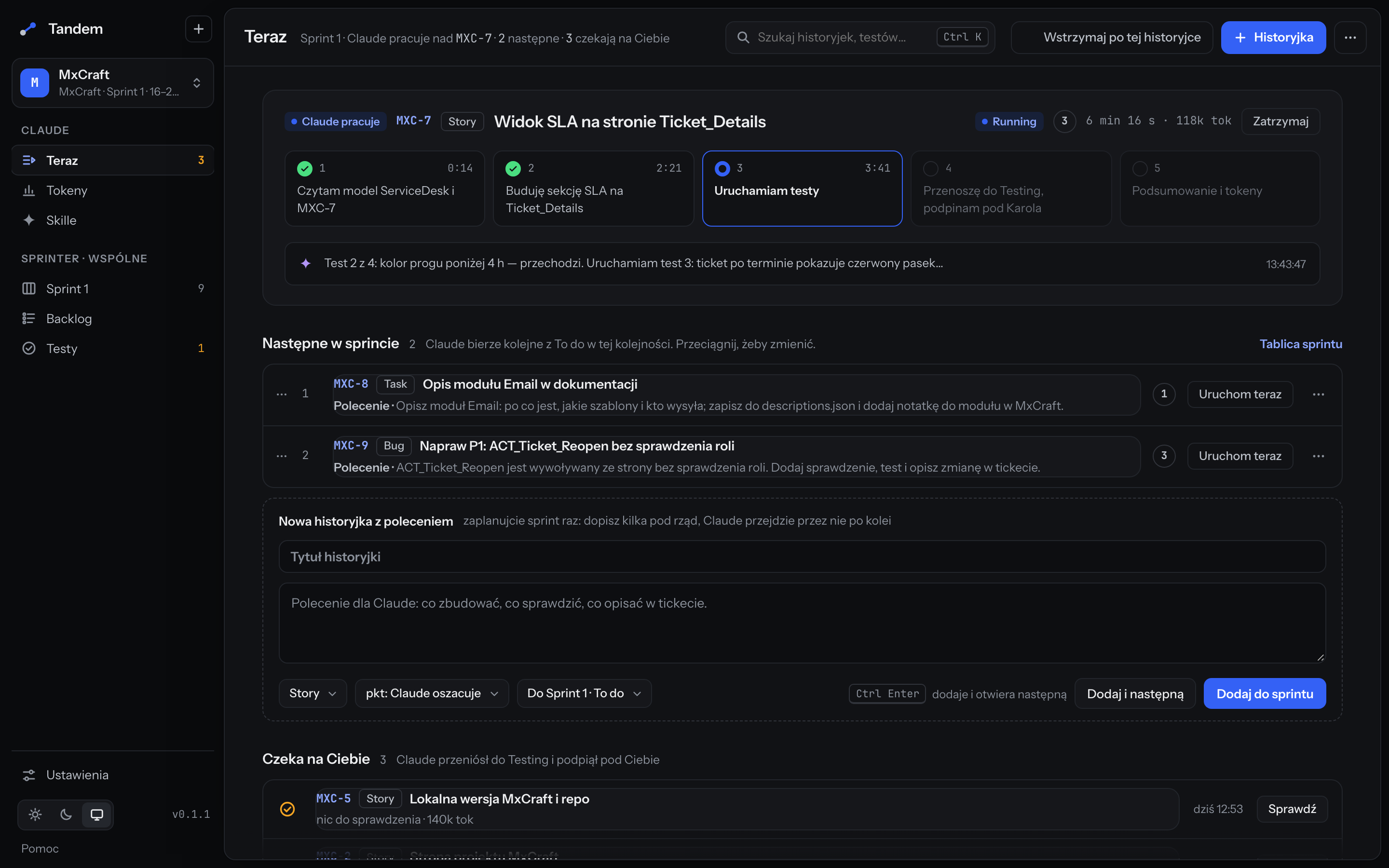
Give Claude Code a week of work and you get a week of transcript. Tandem turns that into a board you can glance at: which story it is on, which step, what it cost, what it needs from you — and a test on your desk when it is done. The sprint is the prompt.
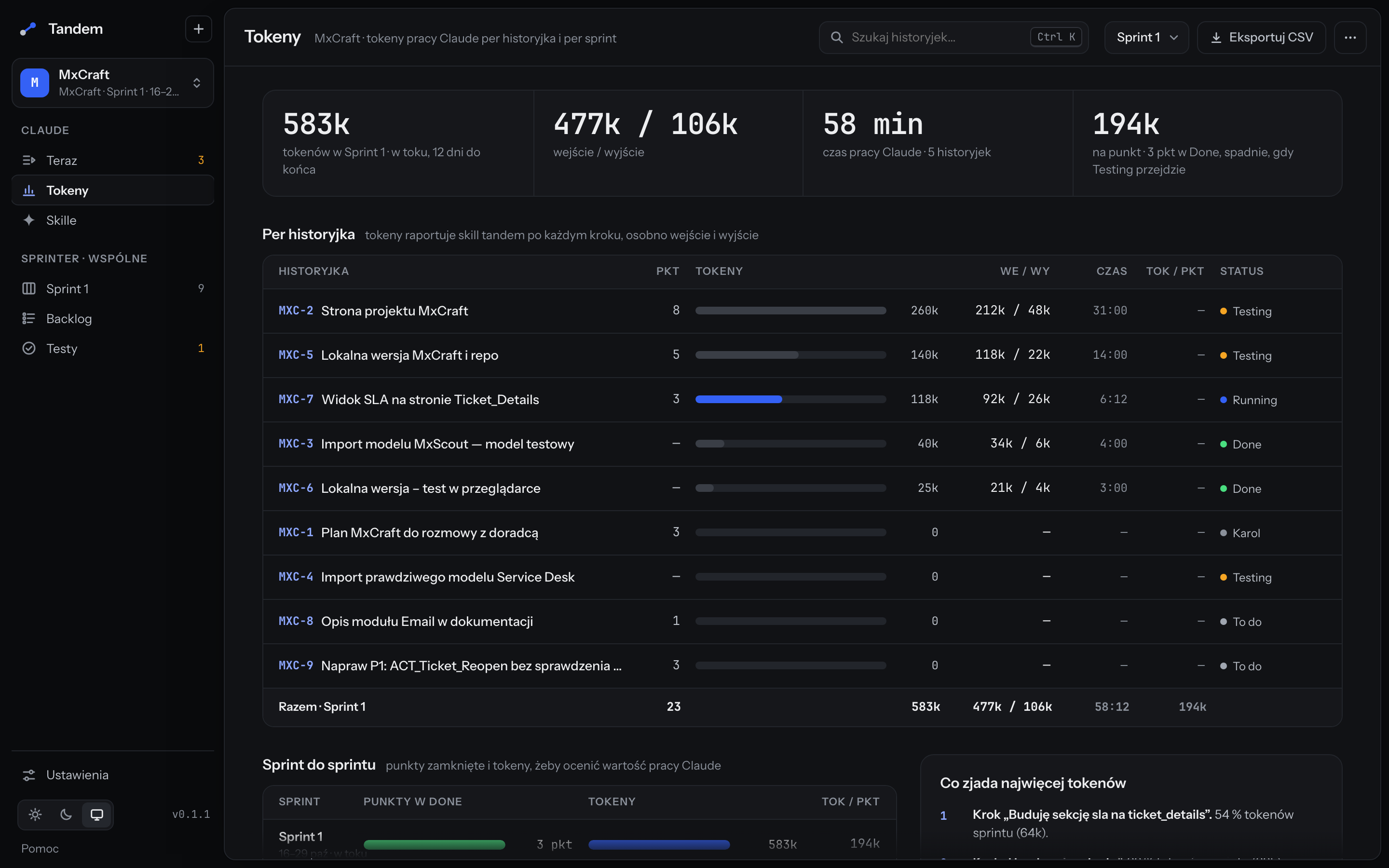
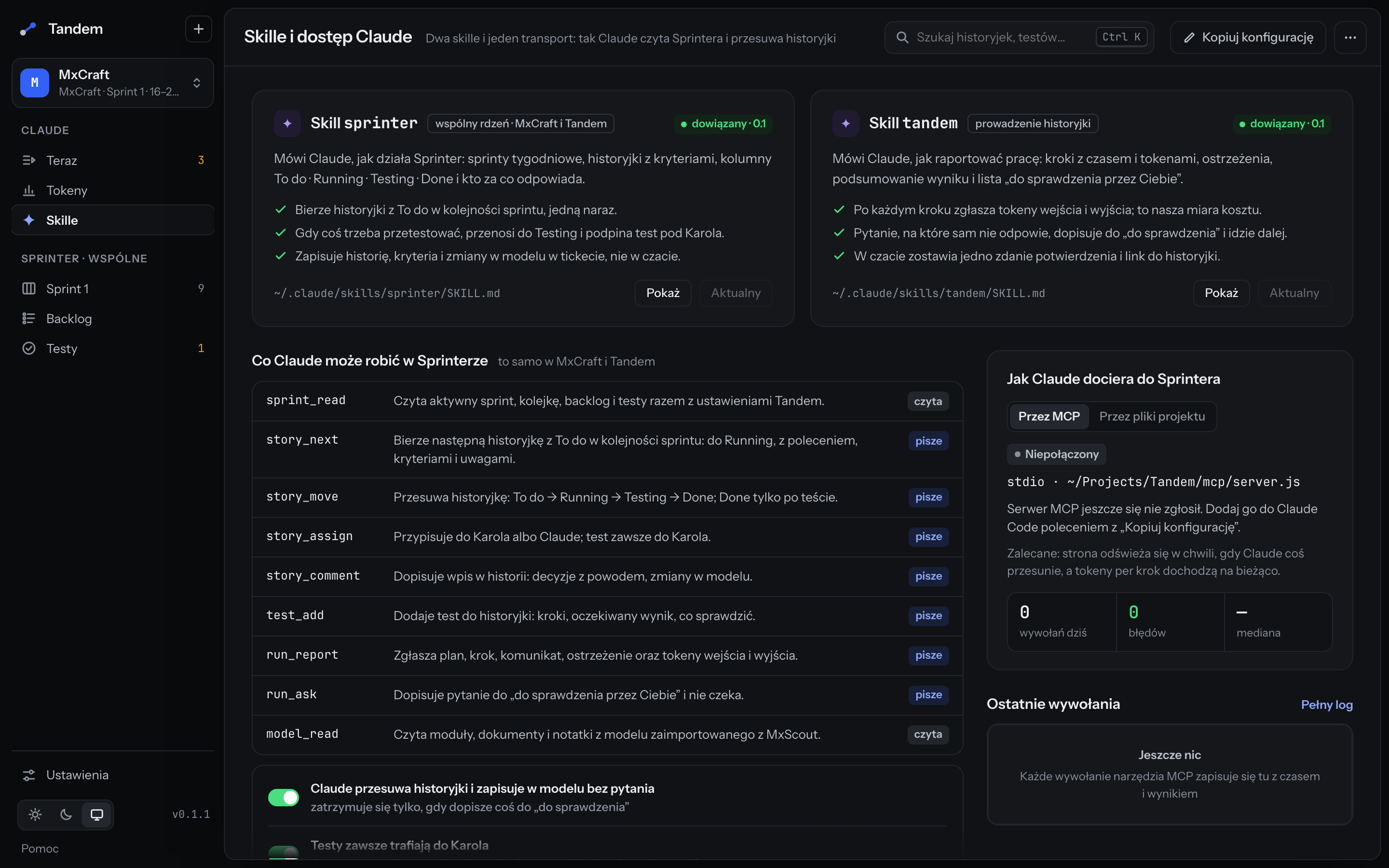
Three screens of its own, and the board.
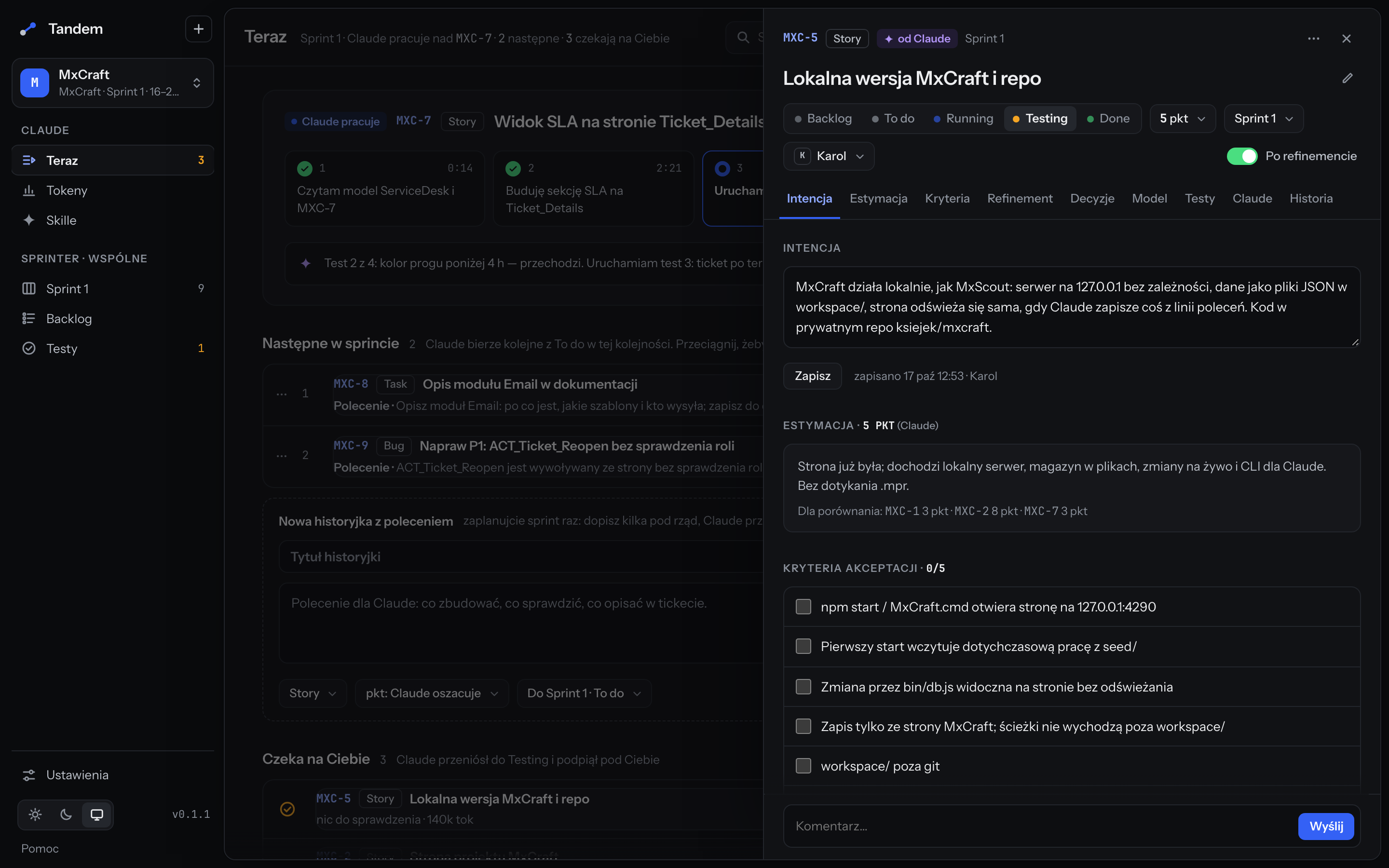
Now, the story drawer, Tokens and Skills belong to Tandem. The sprint board, backlog and tests are the same Sprinter core MxCraft shows — one set of files, two apps.
Plan once a week. Decide when asked.
You plan
An hour at the start of the week: stories, criteria, a brief for each. Add them one after another — Ctrl Enter opens the next.
Claude runs
Takes the first story from To do, works, reports every step with tokens, parks what it cannot decide, moves the story to Testing and takes the next. In order, one at a time.
You test and decide
What waits for you is one list: tests to run, questions to answer, stories to approve. Pass the test and the story is Done; send it back with notes and it goes to the front of the queue.
Nine verbs. No surprises.
The rules live in the tools, not only in the prompt: story.move refuses Done without a passed test, and a read-only switch refuses every write.
Two skills, one transport.
Tandem ships with no AI inside. Claude Code gets two skills you can read, and a way to reach the board. What it writes there is what you see; the chat gets one line and a link.
sprinter
The rules of the shared board: weekly sprints, stories in order, Testing means a test for you, Done only after it passes, history in the ticket. The same skill MxCraft uses.
tandem
How to report: steps with time and tokens in and out, warnings, the last message, questions into the checklist, a summary with what changed. One line in the chat, the rest on the board.
MCP, or just the files
A local MCP server over the same JSON files: the page refreshes as Claude moves. No server? Claude writes the files directly and the page catches up on save.
Boring on purpose.
The same rules as MxScout and MxCraft: a local server, no dependencies, plain files, a strict policy. Every claim below is one grep away in the source.
How MxScout does itThree tools, one graph.
MxScout and MxCraft are about Mendix. Tandem is about Claude, so it dropped the Mx — but it keeps the shell, the tokens and the board, and the same three-dot logo in its own colour.
 reads
reads
MxScout
Reads a Mendix model on your machine and lays it out as documentation people read: processes, modules, flows, pages, risks.
mxscout.seajack.dev builds
MxCraft
Builds a Mendix app with Claude and keeps that work organised: sprints, stories, tests and tokens on the model MxScout read.
mxcraft.seajack.dev runs
runs
Tandem
Hands Claude the sprint and shows its work: steps, tokens, questions for you, tests on your desk. This page.
You are herePrivate beta.
Ask, and you get a link.
Tandem is not public yet: the repository stays private while the loop settles on real sprints. If you run Claude Code on a Mendix project and want the second seat, ask. The link comes with a launcher for Windows, macOS and Linux and the two skills for Claude Code; Tandem reads its board from a copy of MxCraft on the same machine.